Summer in Flagler County: lawns, rain, and what changes in eight weeks
Florida summers move fast. What happens to a lawn, a drive, and a house front between June and August when nobody is home, and how a monthly street-view set keeps you ahead of it.
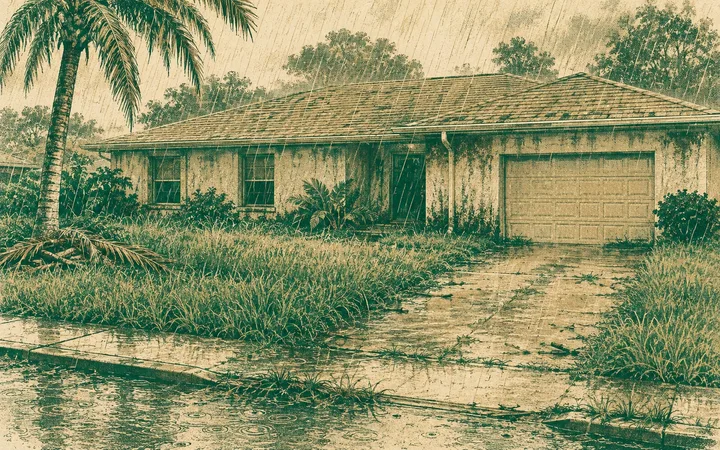
A Florida summer does more to a property in eight weeks than a northern summer does in a season. Heat, daily rain, and long days push lawns, weeds, and mold along at a pace that surprises owners who leave in May and come back in October to a place they barely recognize. The good news is that most of it is visible from the street, and a monthly photo set catches it while it is still small.
The lawn: two weeks is a long time
St. Augustine and Bahia grass grow fast in the wet months. Two weeks without a mow shows; four weeks looks abandoned. A monthly set answers the question every seasonal owner has about their lawn service without a phone call: the grass in the frame either agrees with the invoice or it does not. It also shows edging along the drive and the beds, which crews skip first when they are in a hurry.
Weeds, beds, and the things that take over
Beds fill in quickly with weeds and volunteer seedlings, and a hedge that was trimmed in April is shaggy by July. The set shows the beds along the front and the visible sides, the hedges, and the mulch line, which is where an unattended house first starts to look unattended.
Rain, drainage, and the drive
Afternoon storms drop an inch or two at a time. Where the drive or the swale does not drain, the water stands, and standing water leaves marks: silt on the drive, a bare patch where the grass drowned, a puddle that is still there the next afternoon. Frames of the drive and the swale after a rainy week tell you whether drainage is doing its job.
Mold, mildew, and the north side
Humidity and shade grow a green or black film on walls, walks, and the north side of a roof. It is cosmetic at first and it is the fastest way for a house to look neglected. The visible side walls and the front walk are in every set; if the film is spreading, you will see it month to month and can schedule a pressure wash before it becomes the neighborhood’s comment.
Palms and the wet-season growth
Palms drop fronds and seed pods all summer, and the fronds land on the drive, the roof, and the neighbor’s side. The set shows the crowns and whatever has fallen, which is a good cue for the trimming crew and a good record of whether they came.
Irrigation: on, off, or broken
A broken sprinkler head shows up as a brown circle or a flooded patch, and a system that is running during the wettest month shows up as a lawn that never dries. Neither is dramatic, both cost money, and both are visible from the street.
Trash cans, packages, and the look of an empty house
The details that say “nobody is home” are small: a trash can left at the curb for a week, a package on the step, flyers in the door, a newspaper in the drive. A monthly set shows them, and a quick message to a neighbor or your service fixes them. Over a summer those small corrections are the difference between a house that reads as cared for and one that does not.
A monthly rhythm that works
Most seasonal owners settle on something like this:
- One visit a month from June through September
- An extra visit after any week with unusually heavy rain or wind
- A before-and-after pair for any named storm
- A final set in October before you head back, so you know what to expect
What a visit does not do
A Front View visit is photographed from the public street and sidewalk. The photographer does not enter the yard, test irrigation, check a pool, or go around the back. The visit is a dated photographic record of the exterior as the street sees it, not an inspection or a maintenance service, and its job is to tell you where to point your crews.
How a visit works
No visits are open for booking right now. If you have an account, your past visits and photos are still there.
Every visit is a photographic record of the outside of the property. It is not a home inspection, an appraisal, or a security, patrol, or investigation service.
More in Seasons & weather.