A hurricane-season checklist for absentee owners in Flagler County
A practical, month-by-month list for owners who are away during storm season, and where a before-and-after photo visit fits into it.
Hurricane season runs from June through November, and the stretch from late August into October is when Flagler County owners who live elsewhere feel it most. You cannot be in two places, but you can plan the season so that what needs to happen at the house happens without you, and so that you have a clear, dated picture of the property before and after anything blows through.
This checklist is built around three moments: before the season, when a storm is in the forecast, and after it passes. A street-view photo visit fits at each one, and the rest is the ordinary work of having people and numbers ready.
Before the season: do these once, early
Do these in May or June, while nothing is in the forecast and everyone you need is easy to reach.
- Confirm who has a key and who is responsible for shutters or panels
- Have trees trimmed back from the roof and the power line
- Arrange for lawn service to continue through the season, and to clear debris after a storm
- Photograph the house now, so you have a clean baseline set to compare against later
- Save the numbers for your insurer, your lawn service, and a local contractor in one place
The baseline set
A baseline is a photo set taken when nothing is wrong. It shows the roof line, the trees, the yard, the drive, and the street side of the house in ordinary conditions, with a date on it. Its value is entirely in the comparison later: after a storm, the question is never “does the house look fine” but “what changed,” and a baseline is the only way to answer that from a distance.
Who does what while you are away
Write down the roles before you need them. One person has a key. One person puts up shutters or panels, and knows where they are stored. One crew handles the lawn and will clear debris. One contractor will come out for a roof or a fence if the after set shows a problem. When those four roles are settled in June, September is a matter of phone calls rather than scrambling.
When a storm is in the forecast
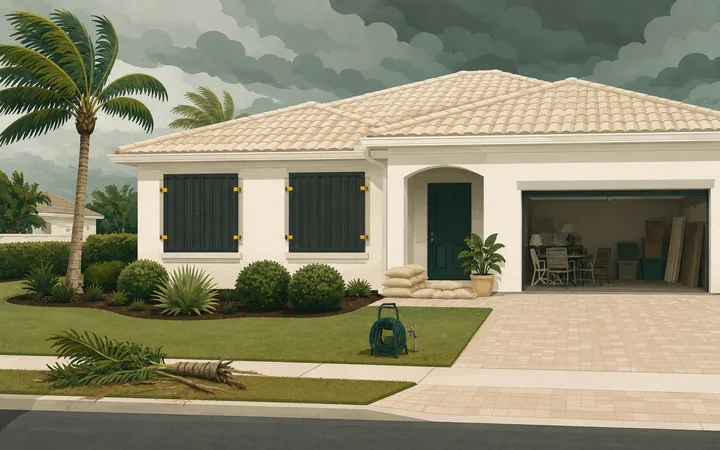
Book a photo visit as early as you can. A standard visit needs 48 hours of notice. An urgent visit can be booked sooner while a window is still open, but once a storm is close, roads and safety come first. A before set shows the house with its preparations in place: shutters up, furniture in, trash cans put away. If something was missed, you will see it while there is still time to make a call.
- Confirm shutters or panels are going up and who is doing it
- Have loose items brought inside: furniture, planters, trash cans
- Ask your lawn service to hold off on the last mow so clippings do not clog drains
- Book the before visit while the storm is still days out
During the storm
Nothing happens at the house during the storm, and nothing should. Nobody should be on the road for a photograph or for anything else, and we do not send anyone out while a warning or an evacuation order is in effect. This is the stretch to wait, watch the county’s updates, and let the people you lined up in June do their part when it is safe.
After the storm
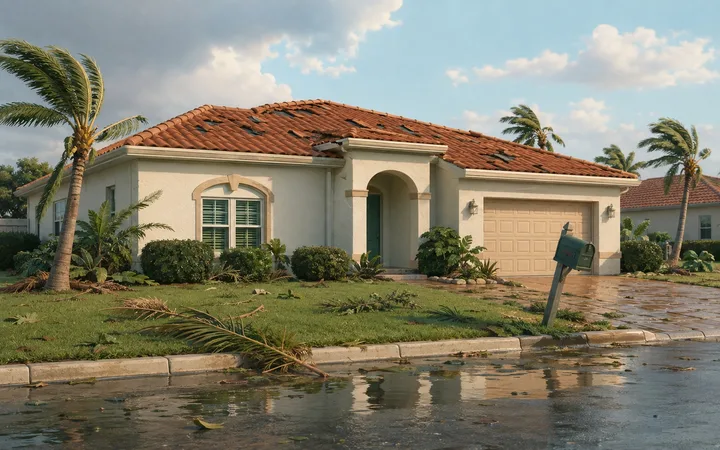
Once roads reopen, book the after visit. The photos show the roof line, the trees, the yard, and the street side of the house as a neighbor would see it, timestamped. That gives you a factual starting point for the next call: to a tree crew, a contractor, or your insurer if anything needs a closer look. The after set is most useful when it is taken before cleanup changes the picture.
- Book the after visit as soon as roads are open
- Compare the before and after sets in your account
- Send the photos to your contractor or insurer if anything needs a closer look
- Arrange debris clearing and a follow-up visit once work is done
Comparing the two sets
Open the before and after sets side by side in your account and go frame by frame: roof edge, gutters, trees, fence, drive, yard. Change is easy to see when the framing matches, which is why the photographer works from the same public vantage points each visit. Where something looks different, the timestamps tell you when it happened, at least within the window between the two visits.
What a photo cannot tell you
A street-view set shows what the road can see. It cannot show the back of the house, the inside, the attic, or anything behind a fence or a gate. It is not an inspection, and it does not replace a contractor walking the roof. Its job is narrower and still valuable: to give you a dated, reviewed picture of the exterior so you know whether the next step is a phone call or nothing at all.
The season in one plan
Put together, the season looks like this:
- June: baseline set, roles assigned, trees trimmed, numbers saved
- Any storm in the forecast: before set booked while it is days out, preparations confirmed
- During: nobody on the road
- After: after set once roads open, comparison, calls to the right people
- Follow-up: a set once repairs or debris clearing are done, so the record closes with the house back in order
How a visit works
No visits are open for booking right now. If you have an account, your past visits and photos are still there.
Every visit is a photographic record of the outside of the property. It is not a home inspection, an appraisal, or a security, patrol, or investigation service.
More in Seasons & weather.