Reading your delivered photos: a walk around the frame
A delivered set is more useful when you know how to read it. Where to look in each frame, how to compare sets over time, what counts as change, and when a picture should turn into a phone call.
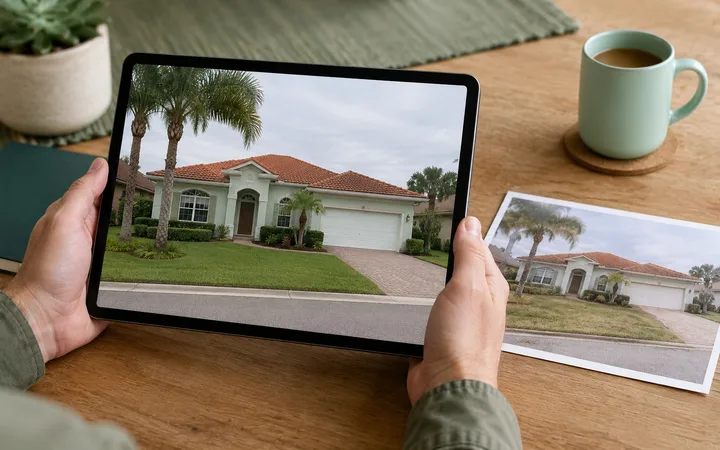
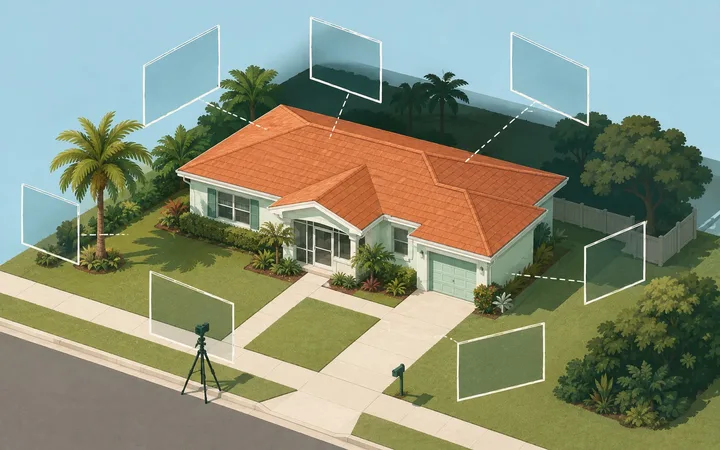
The set is in your account: eight frames, dated, reviewed. What now? Most owners glance through and feel better, which is fair, but a set rewards a slower look. Walk around the frame the way our reviewer does, and you can spot what matters, compare against the last set, and decide whether anything needs a call.
Start wide: the front elevation
The first frame is the whole house from the street. Read it left to right, top to bottom: roof line, gutters, walls, windows, entry, drive, yard. You are not looking for anything in particular yet; you are getting the whole picture so the closer frames make sense.
The roof line and gutters
From the street you can see the roof edge, the fascia, the gutters, and the lower slope. Look for lines that are not straight, gaps at the edge, dark streaks below a gutter joint, and anything sitting on the roof that should not be. These are the frames to compare most carefully across sets, because roof problems start small and are expensive late.
The entry and the garage
The door, the steps, the numbers, the light, and the garage door tell you how the house reads to a visitor and whether anything has been left: a package, flyers, a notice on the door. A garage door that is not fully down, or a screen door ajar, is worth a message to whoever has a key.
The drive and the street
Vehicles, trailers, cans, hoses, fronds, and standing water all show up here. This is also where a code or an association letter usually points. Compare against the last set: is the same thing still there, or was it a one-day event?
The sides and the fence line
The side frames show as far as the fence and the neighbor’s hedge allow. Look at the wall for mildew and staining, the fence for leaning panels, and the ground for standing water after rain. The set says which sides it shows; what is behind a solid fence is not in it, and that is worth remembering before concluding anything.
Lawn, beds, and trees
Grass height, edging, weeds in the beds, mulch, hedges, and the crowns of palms and oaks. This is the frame that tells you whether the lawn service came, and whether a tree crew should. Growth toward the roof, a leaning trunk, and fronds on the drive are the cues.
Comparing sets over time
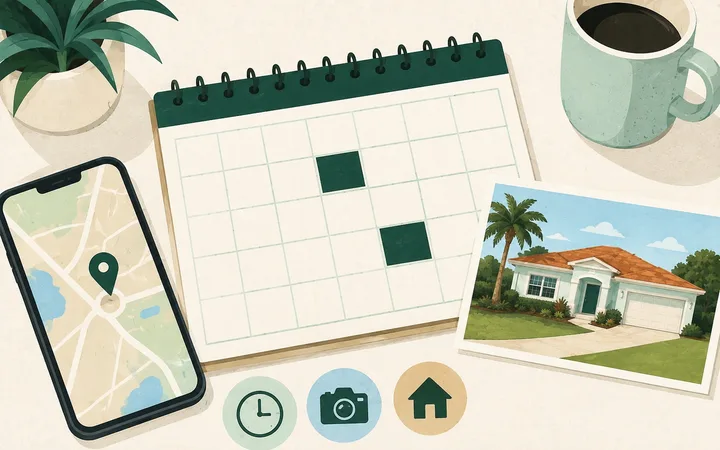
The photographer works from the same public spots each visit, so frames line up. Open two sets side by side in your account and go frame by frame in the same order. Change is what you are looking for: a gutter that was straight and now is not, a bare patch that has grown, a hedge that has doubled. Where nothing changed, move on quickly; where it did, you know what to describe.
What counts as change, and what does not
Light, season, and weather change a picture without changing the house. A wet drive, a shadow across a wall, or a lawn that is brown in a dry week is not damage. Structure, position, and presence are what matter: something moved, something new, something missing. If you are unsure, the next set will tell you whether it is a trend or a Tuesday.
When a picture should become a phone call
A short list of things that usually deserve a call to someone with a key or a truck:
- A roof edge, gutter, or fascia that has moved since the last set
- A limb on the roof or the drive, or a trunk leaning toward the house
- A door, garage, or gate that is not closed
- Water standing in the drive a day after rain
- A notice on the door, or a can at the curb for the second set running
What a set does not tell you
The set from a Front View visit is a photographic record from public places. It cannot see the back, the inside, the attic, or behind a fence, and it is not an inspection or a professional opinion about the house. It tells you what the street saw on a date. The looking up close is for the people whose job it is, and the set makes their job easier by telling them where to look.
How a visit works
No visits are open for booking right now. If you have an account, your past visits and photos are still there.
Every visit is a photographic record of the outside of the property. It is not a home inspection, an appraisal, or a security, patrol, or investigation service.
More in How it works.